Imagine you have a foreign subsidiary that has been operating successfully for many years. Suddenly, difficulties arise. The managing director was always reliable, the results were right, the reports came in on time. What went wrong?
I\’m sure you will recognise one or two of the problems in my fictional story.
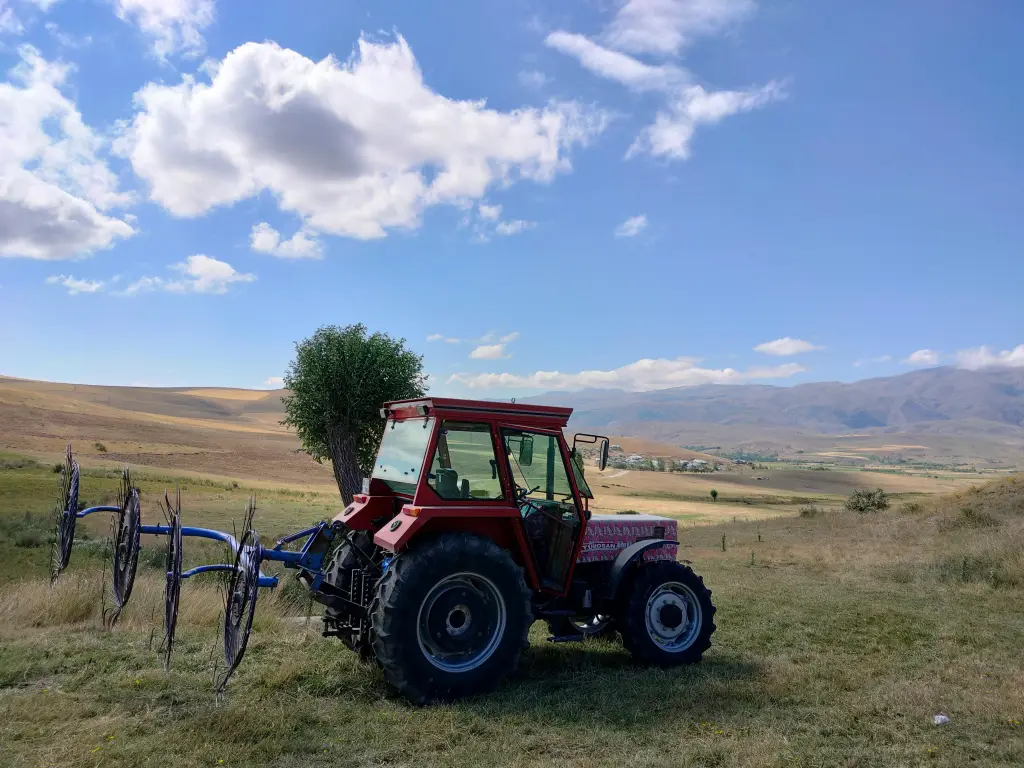
The German family-owned company Elbenstahl AG, with a turnover of EUR 500 million, has been operating Elbenmetal Overseas Ltd. in an emerging market for 20 years, alongside other subsidiaries. The German Managing Director, Erwin Meister, has been on site for 10 years. Since then, the company has always generated or dentable profits. Meister speaks the local language and is highly valued by Thomas Stahl, the CEO of Elbenstahl. In principle, the same agricultural machinery is produced and sold in the region as at the parent company.
The balance sheet shows a clear loss for the first time. Meister gruffly explains to his boss, Thomas Stahl, that the company has always made a profit and that the local market is currently very weak due to the upcoming elections. You just have to be patient and shouldn\’t worry.
EBIT improves slightly over the next few months. But at the next annual accounts, the figures look dreadful. Meister explains to Stahl at the regular Supervisory Board meeting on site that there have been completely unforeseen problems. In order to win the election, the new President increased wages in the manufacturing sector by 20 per cent. This had a negative impact on the economy. The national currency depreciated by 25 per cent at the end of the year. As a result, Elbenmetal Overseas\’ liabilities in euros to the parent company, converted into the local currency in which the accounts must be prepared, rose sharply.
Despite good results, the debt has risen sharply as a result of the new building three years ago. If you build a new building for such a successful company as Elbenmetal Overseas, then it should also be representative and large enough for future growth, said Meister. Unfortunately, this has almost doubled the costs of interest and depreciation compared to the previous rent. Investments in new machines were not made for the time being. The employees are very familiar with the machines that were purchased second-hand from Elbenstahl 10 years ago.
The regular customers in the agricultural sector are satisfied with the agricultural machinery from Elbenmetal Overseas, but are not prepared to pay more, according to Meister. There are long-standing relationships with local suppliers, e.g., for cables, screws, filters and oil. These have of course had to increase their prices significantly due to inflation.
Meister emphasises that now that a stable government is tackling the problems, the market will pick up again at and the sales crisis will soon be overcome. Stahl does not trust this and decides to send an independent, experienced manager to analyse the crisis.
He states the following in his report:
- Sales did not just decline with the market downturn, but long before. This is why the yard is full of unsold machines. The stock of finished goods has grown massively.
- The parts warehouse for production has doubled in size.
- The headcount has not been reduced and costs have risen due to sharp wage increases.
- The loan from Elbenstahl was not only used for the new building as agreed, but also for running costs. To this end, own work was capitalised at significantly inflated costs for the new building.
- The suppliers were prepared to defer their receivables due to default guarantees from the parent company.
Meister is not prepared to co-sign the report, but recognises the problems in a personal conversation with Stahl. An interim manager is appointed as CRO to solve the problems.
Meister explains eloquently to the CRO on the first day that many things work differently in this country. You need a lot of time to understand how to do business here.
After four weeks, Thomas Stahl heeded the CRO\’s call for help and dismissed the managing director. The latter had systematically stonewalled and tried to conceal the already opaque situation.
The CRO states, among other things:
- Internal reports, annual and quarterly financial statements were deliberately embellished by Erwin Meister. Not out of \”bad intentions\”, but in the expectation that he would be able to solve the problems himself this time as well.
- Communication between Elbenstahl and Elbenmetall Overseas on key issues was only possible via Stahl and Meister. The half-yearly supervisory board meetings were always perfectly choreographised. Stahl is now deeply disappointed about the \”breach of trust\”.
- Erwin Meister spoke the local language only rudimentarily and always had to rely on employees at to translate.
- A local managing director with international experience would only have cost half of the lavish expat package. Meister also employed an unnecessarily large number of German expats.
- The products urgently need to be adapted to local needs. In contrast to the early days, farmers today are no longer prepared to use machines that are not optimised for local soil and climate conditions.
- The headcount must be reduced by 25%.
- The machinery urgently needs to be modernised. The \”still good\” but old machines cause absurdly high downtimes.
- Financing must be converted to local currency. This costs higher interest rates, but eliminates the currency risk.
- Purchasing, marketing and sales need to be improved. After sales must be strengthened.
The CRO develops a reorganisation plan, which he coordinates with Elbenstahl AG and communicates to the local stakeholders.
For the implementation, he sets up a Project Management Office, which includes the local auditor, several competent employees, a businessman from the parent company and an external purchasing specialist.
The status of all measures in the reorganisation plan is discussed monthly in a steering group.
To secure liquidity, an overdraft facility was taken out with the local bank, which is collateralised by the parent company. A 13-week liquidity plan is maintained on a rolling basis.
Elbenmetal Overseas still has two years of losses to absorb, which Elbenstahl is compensating for by waiving receivables in order to conserve equity. Then the new products will come onto the market and the earnings situation will stabilise again.
Elbenstahl AG is taking the crisis as an opportunity to review the management of all operational investments. It is agreed that subsidiaries should no longer be assessed solely on the basis of turnover and profit. The right KPIs should help to recognise incipient problems in good time. Monthly balance sheets, P&L, cash flow and operating accounts are scrutinised by Controlling on an ongoing basis. The subsidiaries are scrutinised in regular on-site audits. Investment decisions must always be scrutinised for their profitability. Products are to be localised to a much greater extent. Above all, we no longer want to rely solely on one person to explain how things work in the local market.
– The story and all names are fictitious –