
My Take (Arnulf Christa): A significant efficiency gain: if MIT's modular voxel assembly proves economically viable at scale, it could reshape how prefabrication companies compete in Europe. The carbon advantage alone will attract institutional investors and drive adoption among contractors targeting ESG-conscious clients.
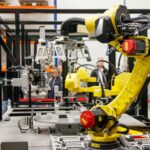
Researchers at the Massachusetts Institute of Technology have demonstrated that buildings constructed from interlocking modular units known as voxels can be assembled mechanically with a significantly smaller carbon footprint. The MILAbots utilize dual-end grippers to position voxel blocks and establish snap-fit connections, enabling rapid and sustainable construction workflows.
The voxel-based robotic assembly system reduces embodied carbon emissions—all emissions generated throughout the material lifecycle—by up to 82 percent compared to established techniques including 3D concrete printing, precast modular concrete, and structural steel construction. Field assembly time for steel and timber voxel systems averages 99 hours, outperforming conventional methods at 155 hours on average.
While individual MILAbots operate more slowly than existing automation techniques, teams of 20 parallel-working robots achieve competitive or lower costs against current automated construction methods. The research has significant implications for German research institutions such as Fraunhofer IWU and TU Munich, which are developing comparable robotic assembly systems.
Source: MIT News